Builders
For people who know the business: define workflows, responsibilities, and useful results.
Explore →Flowise is a business platform for people managing multiple AI agents. Connect company context, work, permissions, and evidence. Start with a workflow blueprint, measure the result, and adapt it for the next team.
Explore the interactive preview and downloadable blueprints. Connected execution is planned.

Build the operating method with business expertise. Extend it with reliable connections. Flowise COO connects the work, evidence, and learning across both journeys.
Start with a practical workflow. Keep its context and evidence connected. Expand the approach when the result supports it.
Give each agent a clear job, owner, budget, and authority. Personal, team, and enterprise are management scopes—not three extra product editions.
Explore →Carry the business model, responsibilities, and completion criteria into the next team. Reauthorize connections and verify the local result.
Explore →Connect work volume, accepted outcomes, effort, and cost. Keep measured results separate from estimates of time saved.
Explore →The planned COO connects the company model to daily work and management improvement. Its authority follows the role, task, and approval—not the confidence of an AI answer.
Explore reports, commitments, delivery, and evidence through practical work templates.
Explore business workflows →Inspect the proposed event contract, download examples, and plan a traceable integration.
Explore developer resources →Business templates and developer connections, built around one company model.
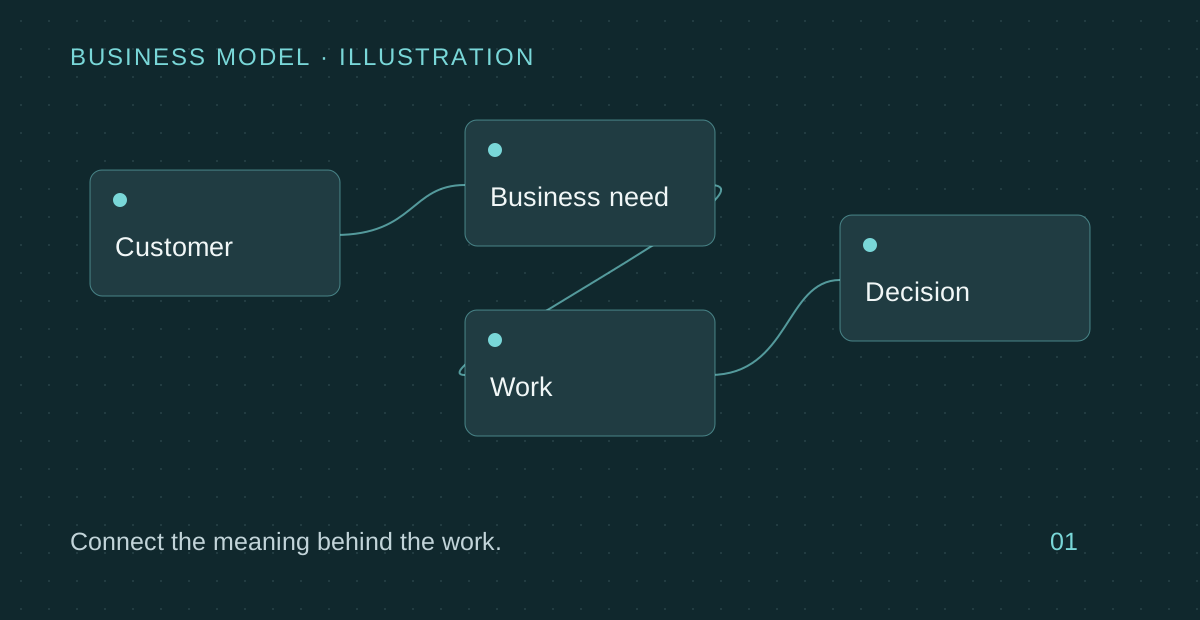
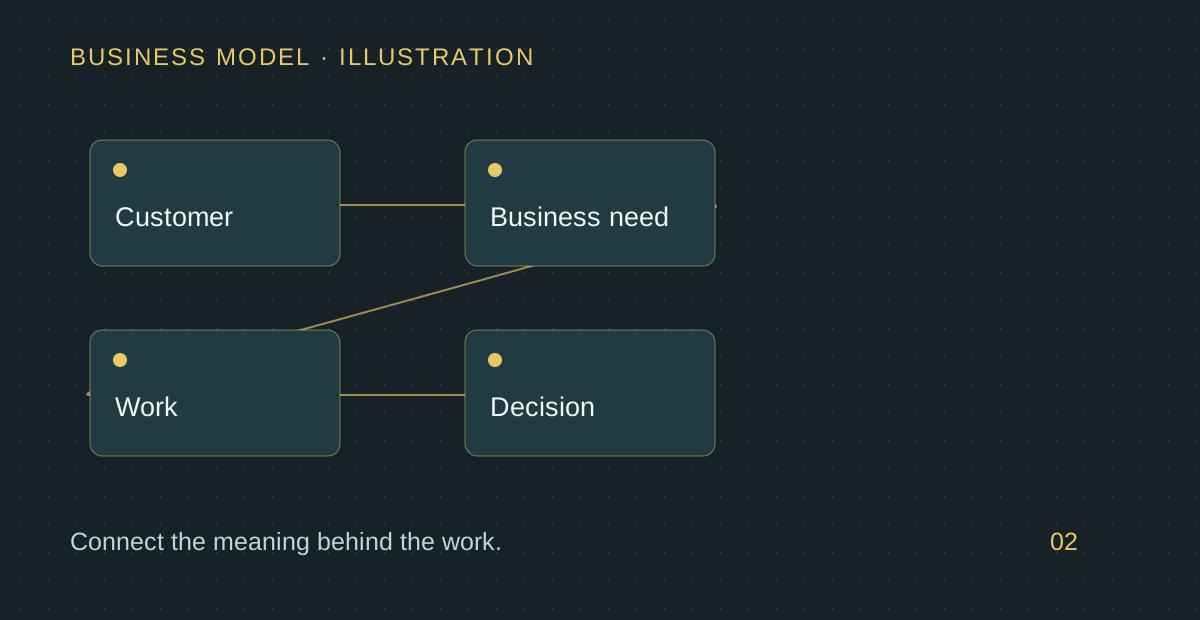
Connect the customer need, the project, and the work it creates. Keep the reason for each task close to the task itself.
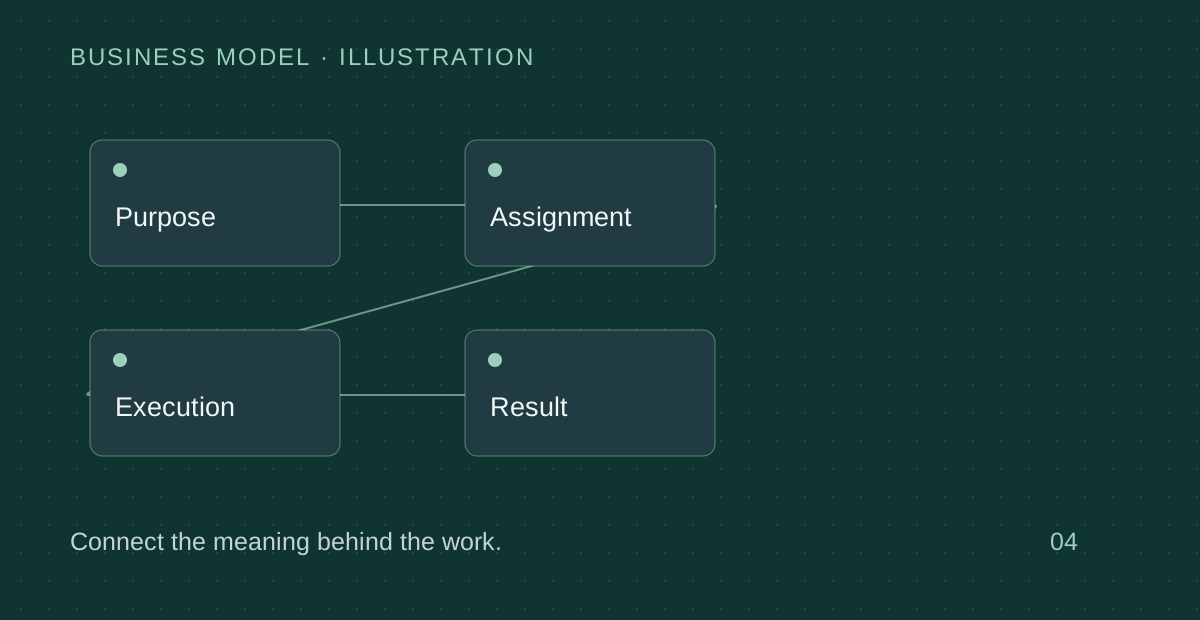
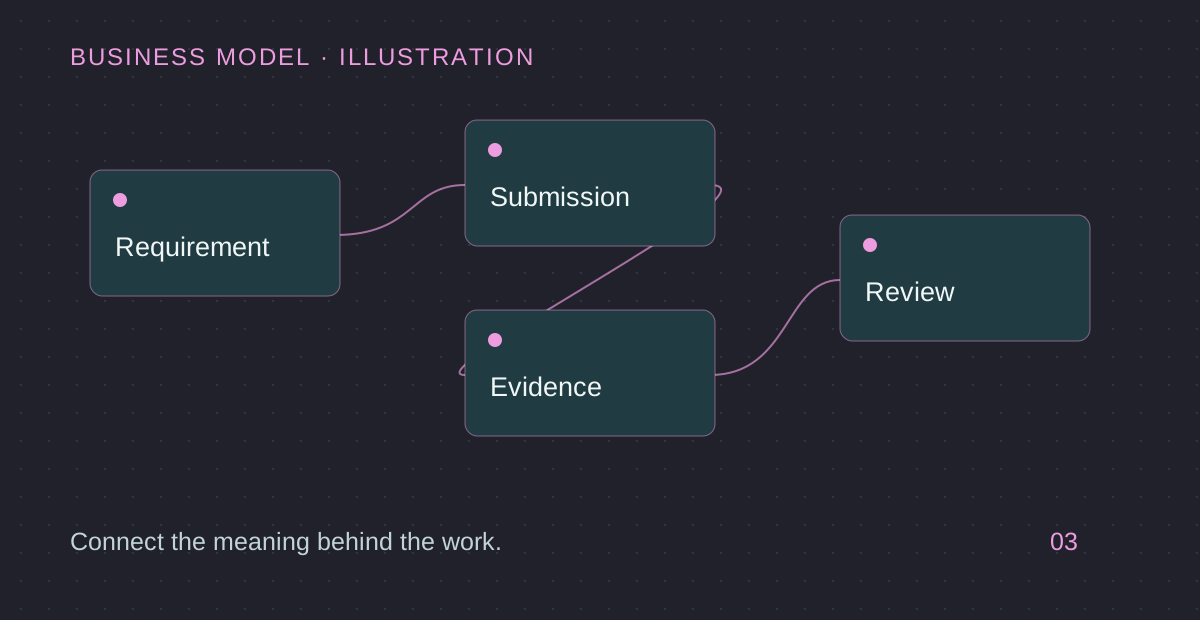
Record who is responsible, what has been submitted, and what still needs review—across employees and agents.
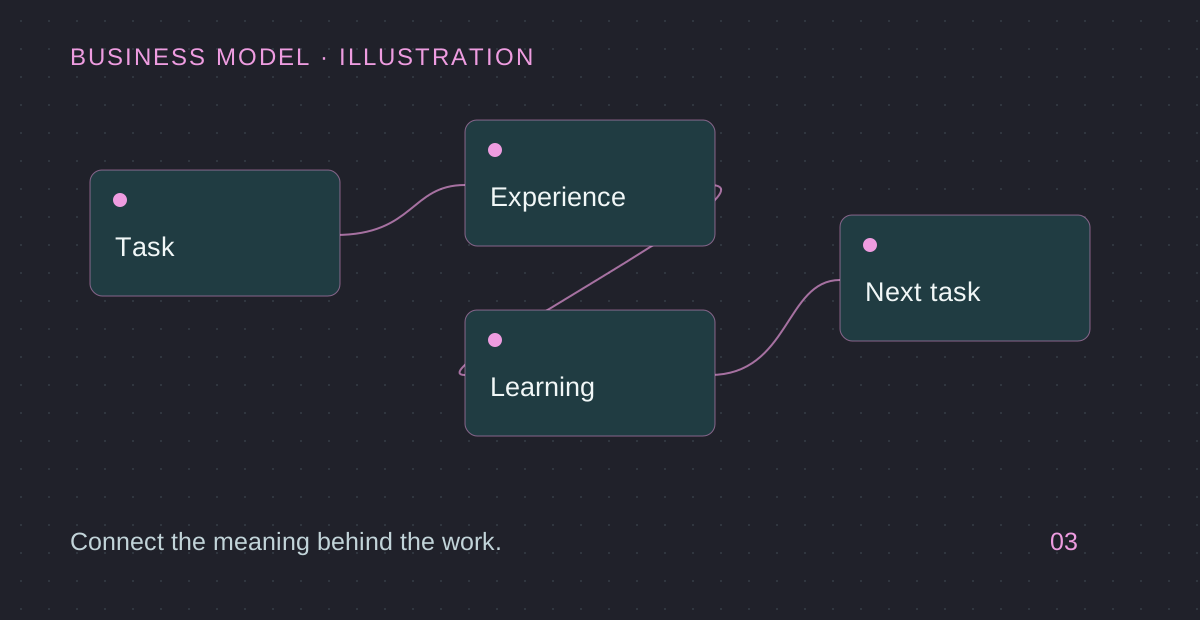
Keep results and supporting evidence connected. Use what the team learns to improve the next assignment.
Trace a task back to the customer requirement and forward to its deliverables.
Collect the purpose, audience, timing, and supporting information before work starts.
Separate submitted work from accepted results, then inspect the details behind the progress report.
Keep assignments and execution attempts separate so you can see what actually happened.
Link the supporting artifact to the work and the requirement it is intended to satisfy.
Use supported APIs to connect approved systems to shared records. Define what each integration may read or change, and keep the actual execution traceable.
Explore APIs and connections →Structure customers, projects, tasks, and supporting information. Give business teams a practical place to organize and review the work.
Explore Core →Extend the foundation with more granular control, automation, execution tracking, and verification for human–agent operations.
Explore the roadmap →Cloud and on-premises are deployment choices. Release availability and integrations require validation.
Explore the operating questions behind agentic business. These are editorial perspectives and illustrative scenarios.
Our initial focus is on Hong Kong and Singapore, with a wider direction across Asian markets. English, Traditional Chinese, and Simplified Chinese support a shared business conversation.