Define the outcome
Agree on scope, quality expectations and acceptance criteria before allocating work.
Connect requirements, tasks, owners, and acceptance evidence. Give your team the context it needs to deliver—and managers the detail they need to review.
Explore Core features →Agree on scope, quality expectations and acceptance criteria before allocating work.
Make handoffs, shared resources and decisions visible so owners can resolve bottlenecks early.
Retain decisions, exceptions and acceptance feedback to improve the next project.
Use a customer commitment as the starting point. Link milestones, contributors, dependencies and acceptance evidence. A submitted deliverable enters review rather than automatically closing the commitment. If a dependency fails, record the affected outcome, assign an exception owner and notify the role that can resolve it. Keep the resulting decision and rework history.
Business people define the purpose, owner, conditions and acceptance rules. Role-based access controls determine who may view, change, assign, approve or verify. The operating history should retain who acted, when, why, under which authority and with what result. Connected systems remain responsible for their own work; Flowise is designed to preserve shared meaning and traceability across those boundaries.
Explore role and industry guides →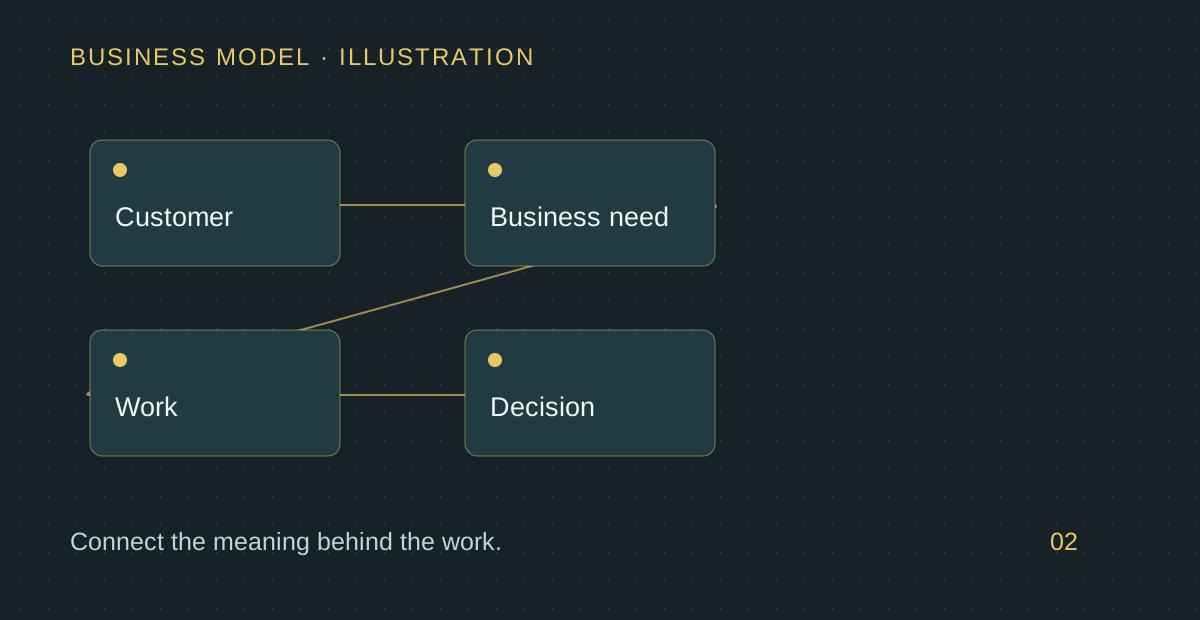
Start with a practical workflow. Keep its context and evidence connected. Expand the approach when the result supports it.
Give each agent a clear job, owner, budget, and authority. Personal, team, and enterprise are management scopes—not three extra product editions.
Explore →Carry the business model, responsibilities, and completion criteria into the next team. Reauthorize connections and verify the local result.
Explore →Connect work volume, accepted outcomes, effort, and cost. Keep measured results separate from estimates of time saved.
Explore →